A stroke can change a life in an instant – not only for the person affected, but for their family as well. While emergency medicine saves lives, it is often the rehabilitation that follows which determines how much independence someone regains in everyday life. Occupational therapy plays a central role in that process. This article explains what occupational therapy after a stroke actually involves, how rehabilitation is structured in Austria, and who covers the costs.
Stroke in Austria: the numbers you should know
A stroke is far from rare in Austria: around 25,000 people are affected every year, with Austria's Ministry of Social Affairs reporting 25,659 cases for 2023 specifically. That makes stroke the third most common cause of death in the country. One in six affected people dies as a result, and among survivors, roughly a third are left permanently impaired or become in need of long-term care – about 7,000 people lose their independence this way every year.
Notably, every second stroke could be prevented by managing risk factors such as high blood pressure, atrial fibrillation, type 2 diabetes, and elevated blood lipids. Atrial fibrillation alone is estimated to cause around 7,500 strokes per year in Austria. For acute care, around 39 stroke units are available nationwide, intended – according to the Ministry of Social Affairs – to be reachable by ground transport within 45 minutes; a dense but not entirely gapless network, since roughly 15% of patients only reach a specialized centre via a secondary transfer.
Recognising the warning signs: the FAST test
Because every minute counts with a stroke ("time is brain"), the FAST test has become an internationally – and in Austria, too – established, easy-to-remember tool:
F – Face: Ask the person to smile. Does one side of the face droop?
A – Arms: Have them raise both arms. Does one arm drift downward uncontrollably?
S – Speech: Have them repeat a simple sentence. Is their speech slurred or hesitant?
T – Time: If even one of these signs is present, call emergency services immediately (144 in Austria).
Awareness campaigns built around the FAST test argue that this knowledge should be "as second nature as a seatbelt" – because acting quickly measurably reduces the extent of lasting damage.
The path through rehabilitation: four stages
Stroke rehabilitation in Austria broadly follows a four-stage model:
Phase A – Acute treatment: Initial care in hospital, usually on a stroke unit.
Phase B – Early rehabilitation: Ideally starts from day one on the stroke unit or neurological ward, with initial physiotherapy, occupational therapy, and speech therapy.
Phase C – Inpatient follow-up rehabilitation: Intensive rehabilitation at a specialised facility, typically over around four weeks.
Phase D – Outpatient rehabilitation: Continued therapy through day clinics or outpatient facilities, often followed by further treatment close to home.
At every stage, a multidisciplinary team – doctors, nursing staff, physiotherapists, occupational therapists, speech therapists, and often psychologists – works closely together and sets rehabilitation goals jointly with patients and their families.
What does occupational therapy after a stroke actually involve?
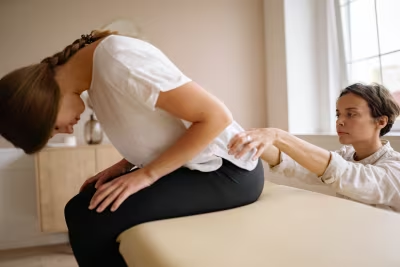
While physiotherapy typically focuses on movement, balance, and the ability to walk, occupational therapy centres on activities of daily living (ADLs). Typical elements include:
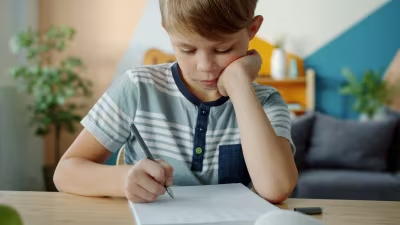
ADL training: Practising eating, washing, dressing, writing, and cooking – precisely the actions that determine independence in daily life.
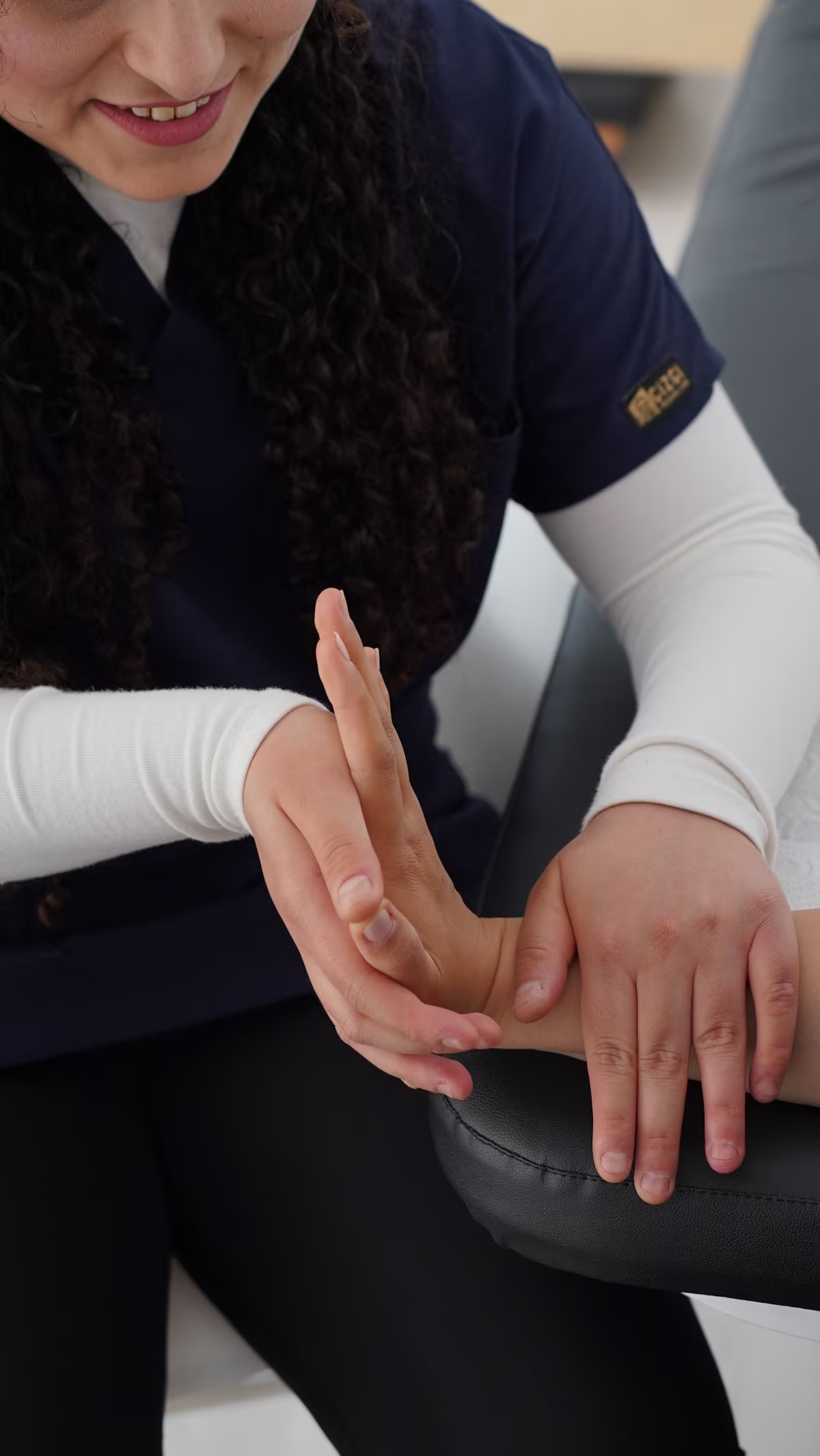
Hand and arm function: Targeted training of grip strength, fine motor skills, and overall strength, for example after one-sided paralysis (hemiparesis).
Cognitive training: For concentration, memory, or planning difficulties, which are common after a stroke.
Assistive devices: Selecting and adapting aids such as gripping tools, dressing aids, or adapted cutlery.
Home adaptation: Advice on structural changes at home – such as ramps, grab bars, or a barrier-free bathroom – so that daily life remains safe after returning home.
The goal is always the same: to regain as much independence and quality of life as possible, whether full recovery is achievable or the focus shifts to making the best of any lasting limitations.
Costs and coverage: what does Austria's health insurance (ÖGK) pay?
During the inpatient rehabilitation stages (A to C), occupational therapy is automatically part of treatment and covered through the facility. In the outpatient setting (phase D and beyond), the following applies to coverage through the ÖGK:
A medical referral is required: from a general practitioner, a specialist in neurology, orthopaedics, or paediatrics, or from a hospital department.
No separate approval needed: Currently, no additional authorisation from the health insurance fund is required for occupational therapy.
Contracted providers: Treatment is free of charge for you; the ÖGK settles directly with the practice.
Non-contracted (private) therapists: You pay upfront and, after submitting the referral, the invoice, and proof of payment, receive a reimbursement of 80% of the ÖGK's contracted rate for the same service.
For assistive devices and home adaptations, additional funding options exist depending on the federal state and long-term care allowance ("Pflegegeld") level, for instance through regional social funds or the Austrian Social Ministry Service – individual advice from the relevant authority is well worth seeking here.
If you're looking for the right occupational therapist near you after a stroke, find therapists near you for a quick overview – filtered by specialty, location, and available appointments.
Frequently asked questions about occupational therapy after a stroke
How soon after a stroke should occupational therapy begin? Ideally already during early rehabilitation (phase B) – that is, while still in acute care on the stroke unit or neurological ward. The earlier targeted rehabilitation begins, the better the chances of limiting lasting damage.
How long does occupational therapy treatment after a stroke usually last? This varies greatly depending on the extent of impairment. While inpatient follow-up rehabilitation usually lasts around four weeks, outpatient occupational therapy can continue for months, or in more severe cases, even years.
Do I need a referral for occupational therapy after a stroke? Yes, in the outpatient setting you need a medical referral, for example from your general practitioner or a neurologist.
What's the difference between physiotherapy and occupational therapy after a stroke? Physiotherapy focuses more on movement, strength, balance, and walking ability, while occupational therapy focuses on the practical application of these abilities in daily life – how regained skills are actually used for eating, dressing, cooking, or writing. In practice, both professions work closely together.
Does the ÖGK also cover assistive devices like gripping or dressing aids? Assistive devices are funded partly through health insurance and partly through long-term-care-related support schemes run by the federal states. Exact responsibilities vary, which is why individual advice – for example from your treating occupational therapist – is recommended.
Conclusion: the right therapist makes the difference
Occupational therapy is often the decisive building block on the path back to an independent life after a stroke. The earlier treatment begins, and the more precisely it is tailored to individual needs, the greater the chances of a good recovery. Use find therapists near you to quickly find the right occupational therapist in your area – whether you are affected yourself or supporting a family member.
Sources
Austrian Ministry of Social Affairs: Status Quo of Austrian Stroke Care
gesundheitswirtschaft.at: More than 25,000 strokes last year
Image credit: Photo by Cansu Hangül on Pexels, Pexels License (free to use)