Few conditions are as widespread in Austria as back pain – and few are surrounded by as many persistent myths. Many people instinctively rest and avoid movement, even though doing so often makes things worse. This article summarizes what current guidelines and Austrian data say about frequency, treatment, and warning signs – and when physiotherapy is the right first step.
Back Pain: Austria's Number One Chronic Condition
According to a large-scale Statistics Austria survey (around 7,500 respondents), back pain is the country's most common chronic health complaint. The numbers at a glance:
Around 1.9 million adults in Austria live with chronic back pain.
Prevalence rises sharply with age: 10% of people under 30, 20.8% of people under 60, but 38.4% of people over 60 are affected – more than one in three in that age group.
About 80% of all cases are so-called non-specific back pain, meaning there's no clearly identifiable structural cause. Only around 20% have a concrete diagnosis such as a herniated disc.
The economic impact is substantial: direct treatment costs in Vienna alone are estimated at around €880 million per year, and experts put the total cost for Austria, including follow-on costs, at €3 to 5 billion per year.
Back pain also plays a central role in 2025 sick-leave statistics: roughly one in five people on sick leave were off due to a musculoskeletal condition, nearly half of them because of back problems. At an average of 33 days, a back-related sick leave lasts almost twice as long as the average sick leave overall.
What the Current Evidence Actually Says: 5 Myths Checked
A recent study on common misconceptions shows just how wide the gap is between everyday assumptions and medical evidence on back pain:
Myth: "Back pain always comes from a specific injury." Up to 59% of respondents believe this – but the vast majority of non-specific back pain has no clearly identifiable structural cause.
Myth: "Bed rest and avoiding movement is the right response." This particularly persistent myth is held by up to 75% of people. The evidence shows the opposite: staying active and continuing normal daily movement as much as possible leads to better outcomes than resting.
Myth: "You always need to see a doctor for back pain." Many acute, non-specific episodes improve on their own within a few weeks, without medical treatment.
Myth: "An MRI or X-ray will show the cause." For non-specific back pain without warning signs, imaging usually isn't more informative than a clinical examination – and unnecessary diagnostics can even cause worry without changing the treatment plan.
Myth: "A herniated disc always needs surgery." Even with a confirmed herniated disc, surgery is only necessary in a minority of cases – typically when symptoms are severe and persist for weeks, or when the warning signs listed below are present.
This assessment aligns with the World Health Organization's (WHO) guideline on non-surgical management of chronic low back pain (December 2023), which places movement and active therapies at the center of care, as well as with Austria's national quality standard for non-specific back pain (adopted in 2020 by the Federal Target-Based Governance Commission). It defines a three-tier care model: level I is basic care by a general practitioner, level II specialist assessment, and level III specialized facilities such as interdisciplinary pain centers – coordinated throughout by a lead treating physician.
When Physiotherapy Helps with Back Pain
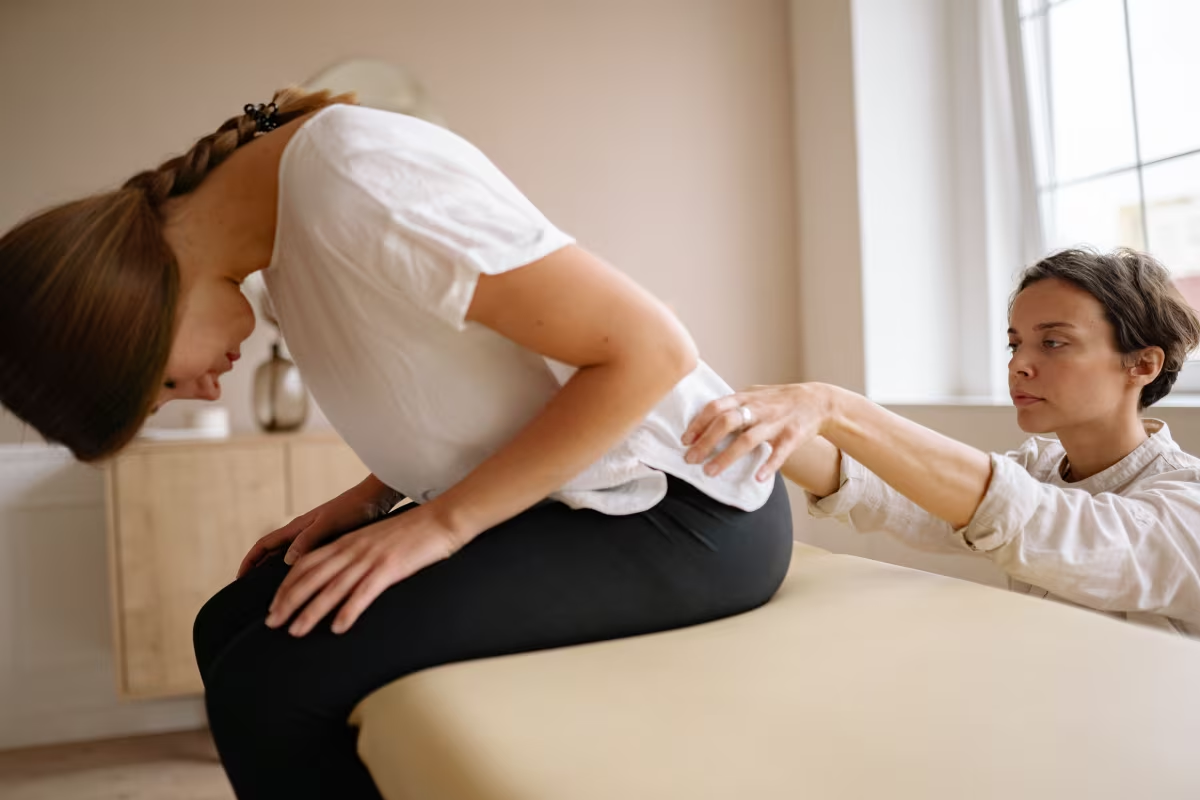
Since roughly 80% of all back pain is non-specific, physiotherapy is usually the most sensible and effective first step – often even before medication or imaging. Typical physiotherapeutic approaches for back pain include:
Exercise and movement therapy, to build core and back muscle strength and maintain mobility.
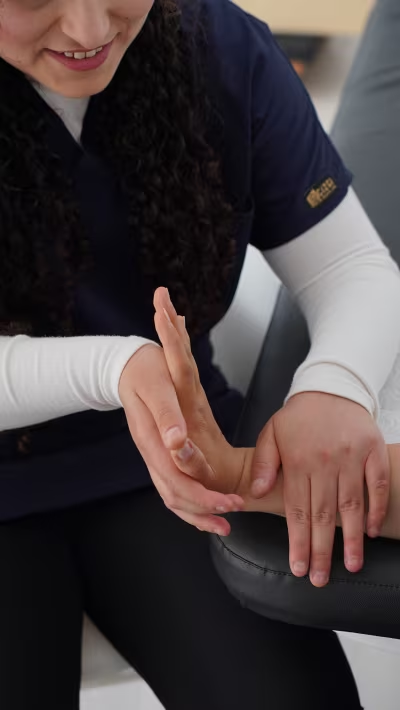
Manual therapy, to release restrictions and provide short-term pain relief.
Posture and back-care training, to identify and change unfavorable daily habits such as prolonged sitting.
Patient education, which guidelines identify as a central component: people who understand that movement usually helps rather than harms are more likely to return to normal activity.
We've already covered the process, medical referral, scheme tariffs, and reimbursement through ÖGK, BVAEB, and SVS in detail in our foundational article on physiotherapy costs in Austria – those frameworks apply equally to back pain.
Warning Signs (Red Flags): When to See a Doctor Immediately
The vast majority of back pain is harmless and improves with movement and, if needed, physiotherapy. In rare cases, however, a more serious cause is behind it. Seek immediate medical attention (when in doubt, call emergency services at 144 or 112) if any of the following warning signs occur:
Back pain following a fall, accident, or sports injury
Pain combined with fever or chills, for example after an infection or with a weakened immune system
Pain radiating into one or both legs with numbness, tingling, or weakness
Sudden bladder or bowel problems (urinary retention, incontinence) or numbness in the saddle/anal area – possible signs of cauda equina syndrome, a medical emergency
Pain that worsens at night or increases when lying down
Severe pain appearing for the first time at an older age
Back pain in someone with a known history of cancer
If none of these signs apply, movement – guided by a doctor or physiotherapist as needed – is generally the right path forward.
Prevention: What You Can Do Yourself
Beyond acute treatment, the evidence is clear: regular movement, an active daily routine, alternating between sitting and standing, and targeted core-strengthening exercises significantly reduce the risk of recurring back pain. Contrary to popular belief, a single instance of "lifting incorrectly" is rarely the cause – a lack of regular movement over time is far more often the real culprit.
Frequently Asked Questions (FAQ)
Does bed rest help with acute back pain? No. Current evidence and guidelines advise against prolonged bed rest. Staying active and continuing normal movement as much as possible generally speeds up recovery.
Do I always need an MRI for back pain? Not necessarily. For non-specific back pain without warning signs, imaging usually provides no additional treatment benefit. An MRI is mainly useful for persistent, treatment-resistant symptoms lasting several weeks, or when a serious underlying cause is suspected.
How quickly should I start physiotherapy? The sooner, the better – especially for recurring pain or symptoms lasting more than a few weeks. Early movement-based therapy can help prevent the condition from becoming chronic.
Does a herniated disc always require surgery? No. Most herniated discs are successfully treated conservatively, with pain relief, movement, and physiotherapy. Surgery is typically only considered for severe symptoms persisting over weeks, or when warning signs such as paralysis are present.
Which type of back pain is a medical emergency? Sudden paralysis, numbness in the saddle/anal area, or new bladder and bowel problems occurring together with back pain can indicate cauda equina syndrome – a medical emergency requiring immediate treatment.
Find the Right Therapist
Whether it's an acute episode or recurring back pain, qualified physiotherapy support often makes the crucial difference between a short episode and a chronic condition. Find physiotherapists near you easily through Therapeutensuche.at – with filters for specialty, location, and availability.
Sources
Kreuzwehland: 1.9 million Austrians suffer from chronic back pain – VIENNA.AT
Back pain: fewer absences in 2025, but short-term sick leave rose – exxpress.at
Austrian Quality Standard for Non-Specific Back Pain – pains.at
WHO guideline for non-surgical management of chronic primary low back pain (December 2023) – who.int
The five most common back pain myths – MMW Fortschritte der Medizin / Springer
Herniated disc: diagnosis, treatment – gesundheit.gv.at (official Austrian health portal)
Acute back pain: when these warning signs mean you should see a doctor – Apotheken Umschau
Image credit: Photo by Yan Krukau on Pexels (Pexels License, free to use)