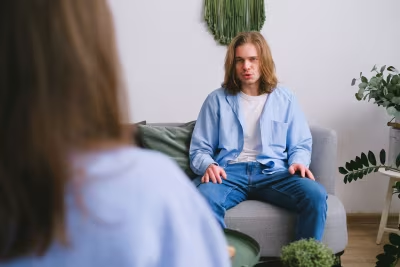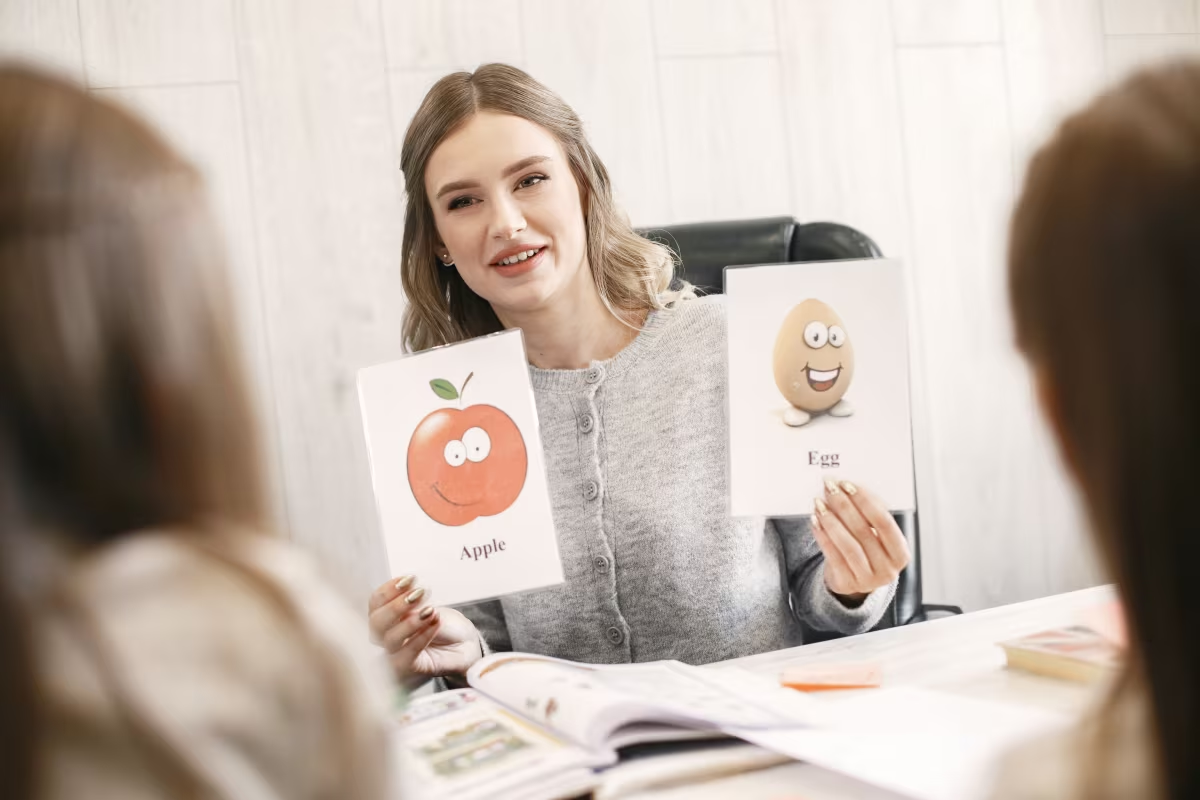
Whether it's a toddler who stutters, a voice that gives out at work, or the loss of language after a stroke — speech therapy (called "Logopädie" in Austria) is one of the least talked-about yet most needed healthcare professions in the country. This article explains what speech-language therapists (called "Logopäd:innen" in Austria) do, who benefits from therapy, what it costs, and how to find the right provider quickly.
What is speech therapy, and what do speech-language therapists do?
In Austria, speech therapy ("Logopädie") is a legally recognized and regulated healthcare profession under the MTD Act (Medical-Technical Services Act), which has applied in its revised form since 1 September 2024. Speech-language therapists work with language, speech, voice, breathing, oral function, and swallowing — with the goal of maintaining or improving people's ability to communicate and participate in society, across all age groups.
In practice, this means independently assessing and treating language, speech, voice, swallowing, and hearing disorders, as well as carrying out audiometric examinations. Clients range from infants through children and adults to older people, and therapists work in hospitals, rehabilitation centers, outpatient clinics, care facilities, early-intervention centers, private practices, and sometimes in clients' own homes.
Training and protected title
"Logopäde/Logopädin" is a legally protected professional title in Austria. Training takes the form of a six-semester Bachelor's degree (180 ECTS) at a university of applied sciences, combining theory with extensive practical training across different care settings. In 2012, speech therapy was additionally recognized in Austria as an independent academic discipline. The professional association logopädieaustria represents the field's professional and ethical standards.
Who benefits from speech therapy?
Children: language development, pronunciation, stuttering
In children, speech therapy is one of the most commonly used forms of therapy. Typical reasons include delayed language development ("late talkers"), unclear or hard-to-understand pronunciation at preschool age, vocabulary and grammar difficulties, and stuttering or cluttering. As a rough guide: if a child speaks almost no single words by around age two, cannot combine simple words by age three, has pronunciation that remains hard to understand at preschool age, or has stuttering that persists for several months or worsens, a professional assessment is worthwhile. The earlier a language development disorder is identified, the more effectively it can be addressed — which is why many pediatricians actively monitor language development during routine check-ups.
Adults: voice, stroke, neurological conditions
Adults benefit from speech therapy too — for example with work-related voice disorders (common among teachers, singers, and call-center staff), stuttering that persists into adulthood, or after a neurological event. Speech-language rehabilitation after a stroke is particularly significant: around 25,000 people in Austria have a stroke every year (25,659 cases in 2023). Studies suggest that about 30 percent of people develop aphasia — a partial or complete loss of language ability — after a first stroke. Speech therapy is considered the most important treatment for aphasia; research indicates that around 44 percent of patients show marked improvement within six months, though progress remains possible well beyond that point.
Speech-language therapists also treat dysarthria (neurologically caused speech disorders, for example in Parkinson's disease or multiple sclerosis) and dysphagia — swallowing disorders that can pose a serious health risk, particularly for older adults and people with neurological conditions.
What does speech therapy cost in Austria?
The good news: speech therapy is well supported by the Austrian Health Insurance Fund (ÖGK) — though the exact amount depends on whether you see a contracted therapist or a private ("Wahl") therapist.
Contracted therapist (with an ÖGK agreement): Treatment is provided free of charge to ÖGK-insured patients.
Private therapist (no ÖGK contract): You pay upfront and are then reimbursed 80 percent of the rate the ÖGK would pay a contracted therapist for the same service.
As a benchmark for private rates, the professional association logopädieaustria recommends around €65 for 30 minutes, €80 for 45 minutes, and €95 for 60 minutes — actual prices can vary by provider.
Medical referral required
Reimbursement always requires a medical referral — issued by a general practitioner, a specialist in neurology, a pediatrician, a dentist, an ENT specialist, or a hospital department. The referral should state the diagnosis and the type and scope of treatment needed. According to current ÖGK guidance, no separate prior authorization from a chief medical officer is required; other insurance carriers (such as SVS or BVAEB) may handle this differently, so it's worth a quick check with your fund before starting treatment. Note: the ÖGK does not cover costs for missed appointments that are not cancelled in time.
Waiting times: a recognized shortage profession
Speech therapy is considered a shortage profession in several Austrian provinces. Media reports have described wait times of up to 1.5 years for a publicly funded ("Kassenplatz") slot in Lower Austria. When the wait for a contracted therapist is too long — especially for children, where early intervention matters most — seeing a private therapist and claiming the 80 percent reimbursement is often the more practical way to start treatment promptly.
How does speech therapy work in practice?
Medical assessment and referral from the appropriate specialist.
Choosing a provider — a contracted therapist (free, possibly a waiting list) or a private therapist (faster access, pay upfront with reimbursement).
Initial consultation and assessment, often including standardized testing.
Individual treatment plan with regular sessions, typically 30–60 minutes.
Progress reviews and adjustments, with parents of child clients often involved in day-to-day practice.
Don't want a long search? Use Find therapists near you to filter specifically for speech-language therapists in your region — including whether they hold an ÖGK contract, their areas of focus, and availability.
Frequently Asked Questions (FAQ)
What's the difference between speech therapy and "Logopädie"? In Austria, the terms are used interchangeably. "Logopädie" is the legally defined professional title for treating language, speech, voice, swallowing, and hearing disorders in people of all ages.
Does the ÖGK cover the full cost of speech therapy? With a contracted therapist, treatment is free for ÖGK-insured patients. With a private therapist, you pay upfront and are reimbursed 80 percent of the standard rate.
Do I need a doctor's referral for speech therapy? Yes. To be reimbursed, you need a referral from a general practitioner, a relevant specialist (e.g. neurology, ENT), or a hospital department.
When should I take my child to speech therapy? As a rough guide: almost no words by around age two, no simple word combinations by age three, pronunciation that's hard to understand at preschool age, or stuttering that persists are all reasons for a professional assessment. When in doubt, it's better to get an early assessment than to wait too long.
How long does speech therapy take? This varies a great deal depending on the condition, age, and underlying cause — from a handful of sessions for a specific pronunciation issue to long-term support, for example after a stroke.
Conclusion
Whether for children with delayed language development, adults with voice problems, or people recovering from a stroke, speech therapy can meaningfully improve quality of life and participation — and it's well supported financially through the ÖGK. Given the sometimes long waits for publicly funded slots, starting your search early and well-informed pays off.
Looking for the right speech-language therapist near you? Use Find therapists near you on Therapeutensuche.at to quickly find the right provider for yourself or your child.
Sources
gesundheitswirtschaft.at: More than 25,000 strokes last year
NÖN: Up to 1.5-year wait for a speech therapy slot in Lower Austria
Image source: Photo by Gustavo Fring on Pexels (Pexels License, free for commercial use)