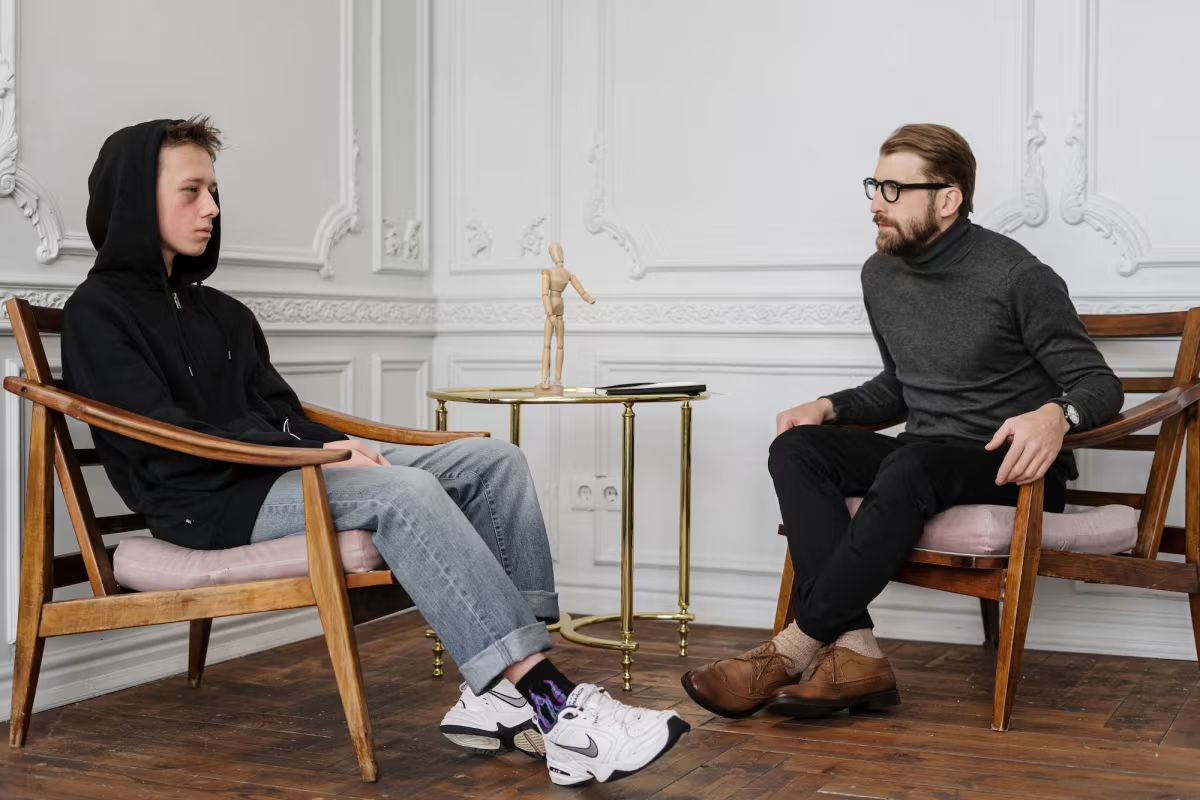
More and more parents in Austria are asking themselves the same question: does my child need professional support — and if so, where can they get it, how quickly, and at what cost? The answer matters more than ever. According to Austria's Court of Audit (Rechnungshof), fewer than half of children and adolescents with a mental illness received treatment back in 2014, and recent reports show significant care gaps persist. This guide gives you a compact overview of warning signs, who's responsible for what, waiting times, costs, and the best first steps to take.
Why this topic is more urgent than ever
The numbers speak for themselves. Austria's child and youth helpline 147 Rat auf Draht received around 40,500 calls in 2025 from children, adolescents, and young adults. The sharpest increases were in calls about anxiety (+29.5%, partly linked to the school shooting in Graz in June 2025), psychological violence within families (+16.9%), physical violence (+19.2%), and suicidality (+13.2%). The most common topics overall were psychosocial distress, family conflict, and suicidality.
At the same time, a 2025 Court of Audit report found that outpatient care is inadequate in at least 12 of Austria's 32 healthcare regions. In Vienna, the average waiting time for an appointment with a private-practice child and adolescent psychiatrist was around 90 days in 2024. The report criticizes existing federal strategy papers for lacking clear targets, benchmarks, and concrete implementation measures.
Warning signs: when should parents pay closer attention?
There's no single definitive sign, but certain changes are a good reason to look more closely and consider seeking professional support:
Persistent withdrawal from friends, family, or previously enjoyed hobbies over several weeks
A noticeable drop in school performance without an obvious reason
Sleep problems, appetite changes, or frequent physical complaints with no medical explanation
Strong mood swings, persistent sadness, irritability, or anxiety
Statements about feeling worthless, hopeless, or "not wanting to be here anymore"
That last point is a red flag that should always be taken seriously — if needed, immediately via the crisis resources listed below.
Who treats children and adolescents in Austria?
Under Austria's Psychotherapy Act, psychotherapists may only treat the conditions and age groups for which they are adequately qualified. Working with infants, children, and adolescents therefore requires a recognized additional qualification completed after the core psychotherapy training; accredited training institutions are listed by the Ministry of Health. It's worth explicitly asking about this additional qualification when searching for a therapist.
Other relevant professions include child and adolescent psychiatrists (medical doctors who can also prescribe medication), clinical psychologists (diagnostics and psychological treatment), and, depending on the issue, occupational therapists or speech-language therapists for developmental concerns. Which specialty fits best depends heavily on the specific concern — when in doubt, the family's pediatrician or GP is a good first point of contact for an initial assessment.
Costs and reimbursement
Contracted ("Kassenplatz") vs. private ("Wahltherapeut") therapists
As with adult psychotherapy, a contracted therapist (Kassenplatz) working directly with ÖGK, Austria's main public health insurer, is free of charge but often comes with long waiting lists due to limited slots. With a private therapist (Wahltherapeutin), families pay the fee upfront and submit the invoice to their insurer afterward. In 2026, ÖGK reimburses a fixed €33.70 per individual therapy session; to claim it, medical confirmation (e.g., from the family's GP or pediatrician) must be obtained before the second session and submitted via the MeineÖGK portal. BVAEB and SVS sometimes offer different, often higher subsidy rates — it's worth checking your specific insurer's website before starting therapy.
The free "Gesund aus der Krise" program
There's a particularly accessible option specifically for young people right now: the Ministry of Social Affairs-funded program "Gesund aus der Krise" ("Healthy out of the Crisis"). It's available to children, adolescents, and young adults up to age 21 and offers up to 15 free treatment sessions in clinical psychology, health psychology, psychotherapy, or music therapy — participants use around eleven sessions on average. Roughly 1,600 providers are part of the network, counseling is available in up to 28 languages, and a University of Innsbruck evaluation found that 93% of participants reported feeling better afterward. The program is funded with €35.15 million and currently secured through June 2027. Children under 14 are registered by a parent; from age 14, adolescents can register independently by phone or email, with placement typically happening within a few days.
First stop in an acute crisis: 147 Rat auf Draht
If a young person is in acute distress, in crisis, or simply needs someone to talk to quickly, Austria's free, anonymous helpline 147 Rat auf Draht is available around the clock — by phone, chat, or email — for children and adolescents themselves as well as for worried parents and caregivers. It's not a substitute for therapy, but it's an important first step and can connect callers to further support.
How to find the right support for your child
Given the long waiting times for contracted slots, it's worth pursuing several paths in parallel: apply for a contracted (Kassenplatz) spot, check the subsidy option with a private therapist at the same time, and — especially for young people up to 21 — look into the free "Gesund aus der Krise" program. Use Find therapists near you to search specifically for child and adolescent psychotherapists with the appropriate additional qualification in your area and compare practices directly. Our guide to psychotherapy costs in Austria can also help you understand subsidies and insurer rules.
Frequently Asked Questions (FAQ)
At what age does a child need a specialized child and adolescent psychotherapist? There's no fixed legal age cutoff; what matters is that the therapist holds the recognized additional qualification for working with infants, children, or adolescents. Ask the practice directly about this.
Do I need a referral to see a child and adolescent psychotherapist? No, no medical referral is required to start psychotherapy. However, to claim the ÖGK subsidy for a private therapist, medical confirmation is required before the second session.
Is participation in "Gesund aus der Krise" really completely free? Yes, up to 15 treatment sessions are free of charge for children, adolescents, and young adults up to age 21 under the program, as long as funding (currently secured through June 2027) continues.
What if the situation is urgent and I can't wait for a first appointment? In an acute crisis, the free helpline 147 Rat auf Draht is available around the clock — by phone, chat, or email — for children, adolescents, and parents alike.
Can parents themselves get support from Rat auf Draht? Yes, 147 Rat auf Draht explicitly also counsels parents and other caregivers, for example when they're worried about their child or dealing with family conflict.
Takeaway: pay attention early, pursue several paths at once
The mental health of children and adolescents in Austria is under real strain — but there are concrete, sometimes entirely free, sources of support. Parents who respond early to warning signs, explore several options in parallel, and know the right number to call in a crisis give their child a crucial head start. Get started now: Find therapists near you and compare suitable child and adolescent psychotherapists in your area.
Sources
Austrian Court of Audit: Psychiatric care – children and adolescents severely underserved (2025)
147 Rat auf Draht: 2025 Annual Review – Marked increase in counseling on violence
ÖBVP Austrian Federal Association for Psychotherapy: Infant, Child and Adolescent Section
Header image: photo by cottonbro studio on Pexels, free to use under the Pexels License. Original photo