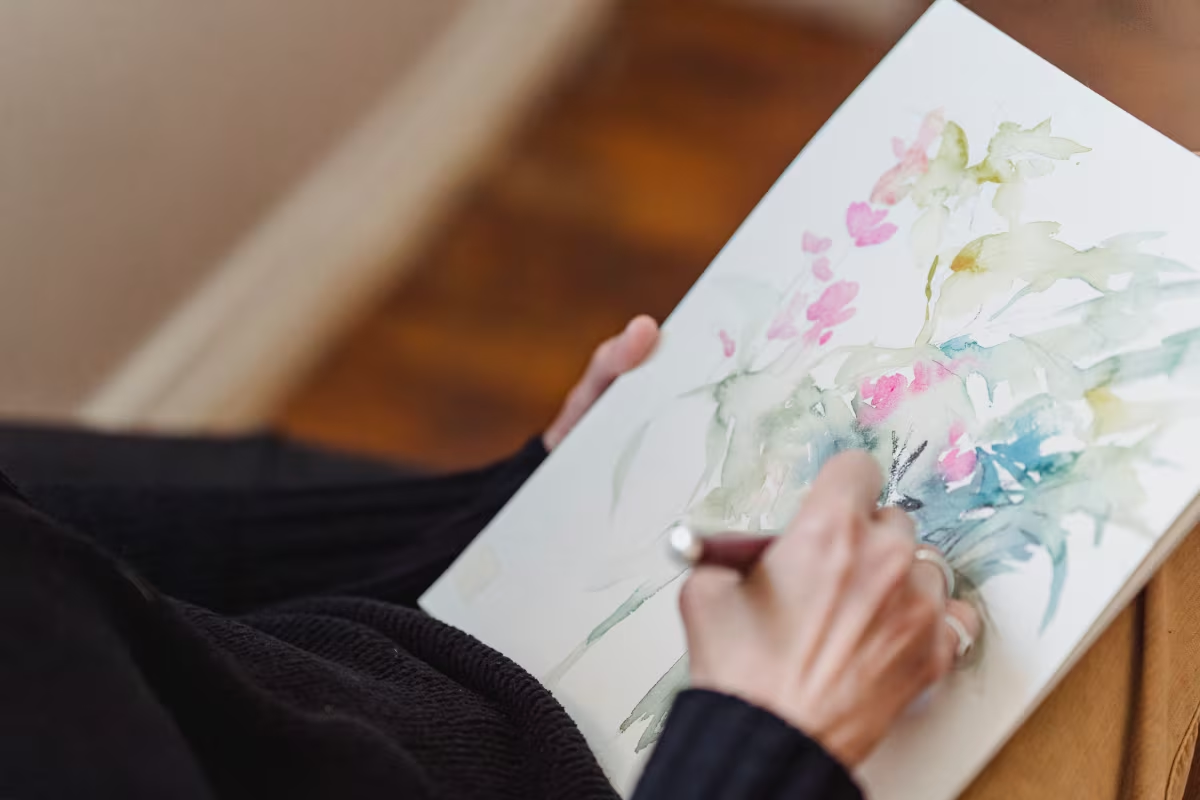
Not every form of support for emotional distress happens purely through talking. Art therapy, music therapy, dance/movement therapy and drama therapy deliberately use creative, non-verbal expression – complementing classic psychotherapy or medical treatment in meaningful ways. Yet these so-called "alternative" or complementary therapies are often misunderstood: Is this a legally protected profession? Does insurance cover it? And who actually benefits from art or music therapy? This article brings clarity, with a focus on the Austrian legal situation in 2026.
What counts as "alternative" or complementary therapy?
Creative or arts-based therapies work through painting, sculpting, music, movement or role-play rather than words alone – think art therapy, music therapy, dance/movement therapy or drama therapy. The label "alternative" is a bit misleading: most of these approaches see themselves as a complement to, not a replacement for, psychotherapy, clinical psychology or medical treatment. They're often used where words alone fall short – for children, people with dementia, stroke survivors, or people in acute crisis.
Two of the best-established forms in Austria are art therapy and music therapy. Legally, though, the two differ significantly – something many people looking for help don't realize.
Music therapy: a legally regulated health profession
Since 1 July 2009, music therapy in Austria has been governed by the Music Therapy Act (Musiktherapiegesetz, MuthG, Federal Law Gazette I No. 93/2008), which establishes it as an independent, state-recognized health profession. The law defines music therapy as an "independent, scientifically, artistically and creatively grounded, expression-based therapeutic form" and regulates its use in prevention, acute and chronic treatment, rehabilitation, and the development of social skills.
The title "music therapist" is legally protected. There are two levels of practice:
Co-responsible practice: following a 6-semester bachelor's degree at a university or university of applied sciences, carried out under referral from physicians, clinical psychologists, psychotherapists or dentists.
Independent practice: requires an additional 4-semester master's degree; therapists may then practice independently, though a medical or professional referral is still required when treating an illness or in rehabilitation.
All licensed music therapists are entered in an official national health professions register – a useful way to check whether a provider is properly qualified.
Art therapy: an established practice without its own profession law
Art therapy stands on different legal footing. The title "art therapist" is not legally protected in Austria, and there is no dedicated profession act comparable to the Music Therapy Act. Art therapy is a permitted activity, but it is explicitly neither a medical nor a psychotherapeutic activity – without additional qualification (for example as a licensed psychotherapist or clinical psychologist), practitioners are meant to work only in a "supportive and complementary" capacity and may not replace medical or psychotherapeutic treatment.
Training pathways vary widely, from university programs in clinical art therapy (typically requiring a bachelor's degree plus relevant professional experience) to specialized courses at adult-education institutions. A single, unified professional profile does not yet exist – an earlier umbrella association (A.BOAT) dissolved in 2010 after concluding that a joint profession law was premature at the time. Today, orientation is mainly provided by the ÖFKG (Austrian Professional Association for Art and Expressive Arts Therapists), which sets quality criteria for its members and offers a member directory.
Practical tip: When looking for an art therapist, ask specifically about their training background, documented practical experience and – ideally – membership in a professional body such as the ÖFKG, since the title alone offers no guarantee of quality.
What are art and music therapy used for?
Both approaches are used across a broad range of concerns, including:
burnout, stress and exhaustion
anxiety disorders and depressive moods
trauma-related disorders and acute crises
neurological rehabilitation (e.g., after stroke or with Parkinson's disease)
developmental and behavioral challenges in children and adolescents
dementia and age-related conditions
cancer and palliative care
In music therapy, methods range from actively playing instruments to receptively listening to music followed by verbal reflection; a session typically lasts between half an hour (individual therapy) and two hours (group setting). Art therapy works with methods such as painting, drawing, clay modeling or scenic/expressive work, and sessions in practice commonly last 50 to 90 minutes.
On the evidence base: a 2019 scoping review published by the World Health Organization ("What is the evidence on the role of the arts in improving health and well-being?") analyzed several hundred international studies and concluded that artistic and creative interventions can positively influence both mental and physical health across life stages and health conditions – as a complement to, not a substitute for, standard medical care.
Cost coverage: who pays for art and music therapy in Austria?
The current legal and financial situation is the same, sobering story for both:
In outpatient, private-practice settings, Austria's statutory health insurance (ÖGK and others) currently covers neither art therapy nor music therapy – unlike physiotherapy, occupational therapy or speech therapy, there is no insurance contract and no percentage-based reimbursement here.
In inpatient settings and certain hospital outpatient clinics, music therapy with a physician's order is regularly part of the treatment offering and is thus covered as part of hospital care; art therapy, too, is a fixed part of the program in many hospitals, psychiatric clinics and rehabilitation facilities.
In private practice, clients typically pay out of pocket. Typical rates for an individual session run roughly €80 to €160 (depending on length, setting and region); many practices offer discounted five- or ten-session packages as well as student or reduced-income rates.
Some private supplementary insurance policies partially cover complementary/alternative healing methods – it's worth checking your own policy.
Recent development: In 2025, the Austrian Federal Ministry of Labour, Social Affairs, Health, Care and Consumer Protection established a Music Therapy Advisory Board tasked with working toward a social-insurance-based financing arrangement for music therapy. The professional association ÖBM (Austrian Professional Association of Music Therapists) has been pursuing financing initiatives since 2013. Whether and when this will lead to a regular insurance benefit remains open – Therapeutensuche.at will continue to track the topic.
Frequently Asked Questions (FAQ)
Is "music therapist" a legally protected title in Austria? Yes. Since the Music Therapy Act of 2009, the professional title has been legally protected; training runs through a bachelor's degree (co-responsible practice) or an additional master's degree (independent practice), and all licensed practitioners are entered in a national register.
Is art therapy a legally regulated profession in Austria? No. Unlike music therapy, art therapy is not (as of 2026) a legally regulated health profession in Austria, and the title itself is not protected. Anyone seeking a provider should look for concrete training credentials and membership in professional bodies such as the ÖFKG.
Does Austrian statutory health insurance (ÖGK) cover art or music therapy? Not currently in outpatient, private-practice settings. Coverage by statutory health insurance is essentially limited to inpatient care and certain hospital outpatient clinics with a physician's referral.
Can art or music therapy replace psychotherapy? No, both are understood as complementary approaches. They are frequently used alongside psychotherapy, clinical-psychological treatment or medical rehabilitation, but do not replace them when a medical condition is present.
Who benefits most from these therapy forms? Particularly people for whom purely verbal approaches are difficult – such as children, people with dementia, those recovering from neurological conditions, people with trauma-related disorders, or those in acute crisis – but also anyone looking for a low-threshold way to address stress, exhaustion or life transitions.
Finding the right path
Art and music therapy can be valuable complements on the path to greater emotional balance – provided they're offered by qualified professionals and, where needed, coordinated with medical or psychotherapeutic treatment. Whether you're looking for art therapy, music therapy, psychotherapy or another suitable option, use Find therapists near you on Therapeutensuche.at to filter by specialty, location and focus area and find the right point of contact in Austria.
Not sure which therapy form fits your needs? Use the therapist search for your region to find qualified art and music therapists, along with other professionals, near you – quickly, up to date, and Austria-wide.
Sources
ÖFKG – Austrian Professional Association for Art and Expressive Arts Therapists
Example art therapy rates: leben-als-kunst.at (Vienna), atelier mishugge
Image source: Photo by Greta Hoffman on Pexels (Pexels License, free to use)